Ask The Optical Engineering Experts®
Date
September 29, 2025
Author
Katie Russell
Time
4 min
Share this Post
What is an optics question that keeps you up at night? From quantum mechanics to the nitty-gritty of how to collimate for the automotive sector, the field of optics is full of fascinating challenges that span from complex theories to real-world uses.
Drop your most intriguing optics question here.
Whether you’re wondering about:
• Advanced imaging systems
• Lens design dilemmas
• Measurement techniques
• Or that weird optical phenomenon you can’t explain
We want to hear it all!
We’ll handpick the most compelling questions and deliver expert insights that help build a more open dialogue around optics and contribute to the growing body of knowledge in our field.
So… what’s been bugging you about optics lately?
Thank you for submitting your questions!
Continue reading to discover previously answered Q&As.
QUESTION:
Here’s what I’ve been wondering about lately. (Topic: Vision)
When we photograph a point source that is out of focus, we see a nice round, uniform circle of light: classic “bokeh”.
BUT, when I take off my glasses to look at a white point source with poor focus correction, I see a spidery round pattern, very nonuniform, high contrast, still white. Left and right eye patterns are not the same.
My questions:
1. Surely I’m not the only person who has noticed this! Does it have a name?
2. What causes it? Irregularity of the cornea or internal eye optics? Would a contact lens change it? Maybe something to do with the retina?
3. Is there any way to illustrate or photograph this effect?
Here’s what I’ve been wondering about lately. (Topic: Vision)
When we photograph a point source that is out of focus, we see a nice round, uniform circle of light: classic “bokeh”.
BUT, when I take off my glasses to look at a white point source with poor focus correction, I see a spidery round pattern, very nonuniform, high contrast, still white. Left and right eye patterns are not the same.
My questions:
1. Surely I’m not the only person who has noticed this! Does it have a name?
2. What causes it? Irregularity of the cornea or internal eye optics? Would a contact lens change it? Maybe something to do with the retina?
3. Is there any way to illustrate or photograph this effect?
ANSWER:
Thanks for your question! It can be tricky to make assertions about visual experience because so much neural processing occurs after light reaches the retina. However, what you are describing sounds like the point-spread function (PSF) of your eye. It likely appears more spidery than the uniform circle of light produced by a camera lens because the average eye has more high-order aberration than a camera. Also, I’d guess that the amount of defocus you’re experiencing is much less than what’s applied to something like the background of a portrait photograph.
The aberrations creating this pattern stem from irregularities in the cornea and internal optics. These are somewhat unique to each eye, meaning the patterns you perceive will differ between them. That said, they are not entirely unrelated; it is common for the wavefront error patterns of each eye to be nearly mirror images of one another.
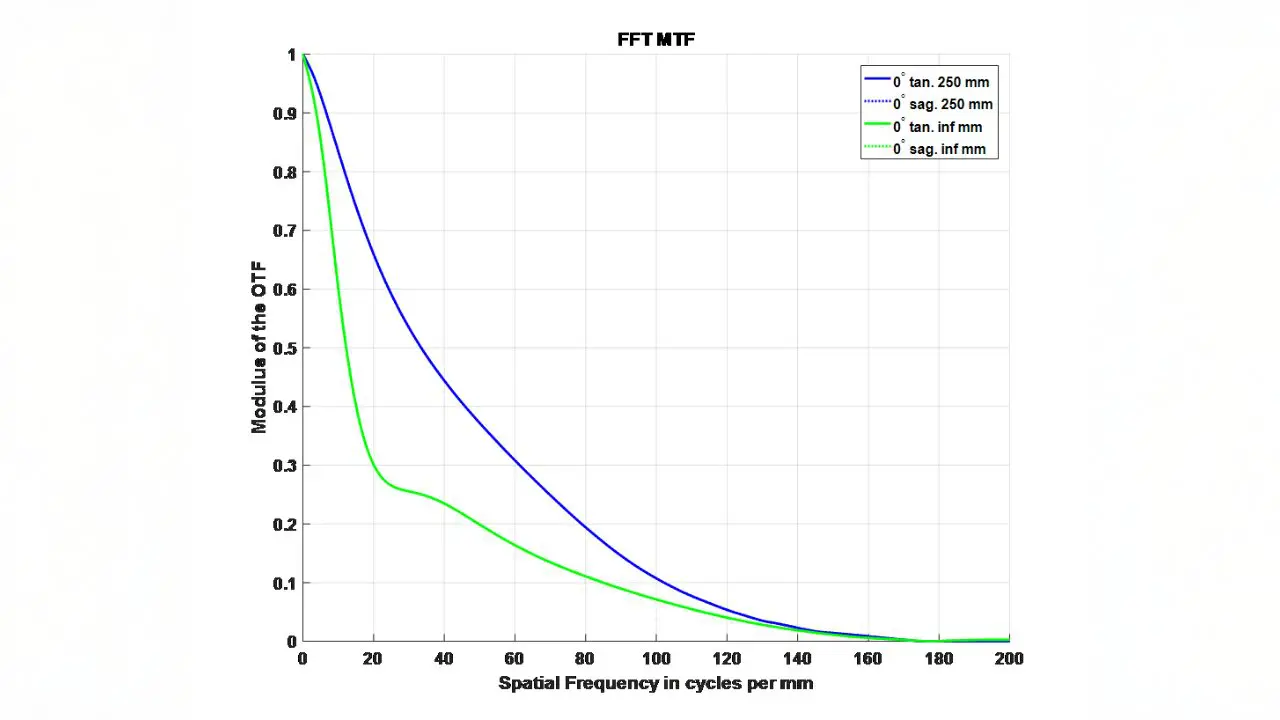
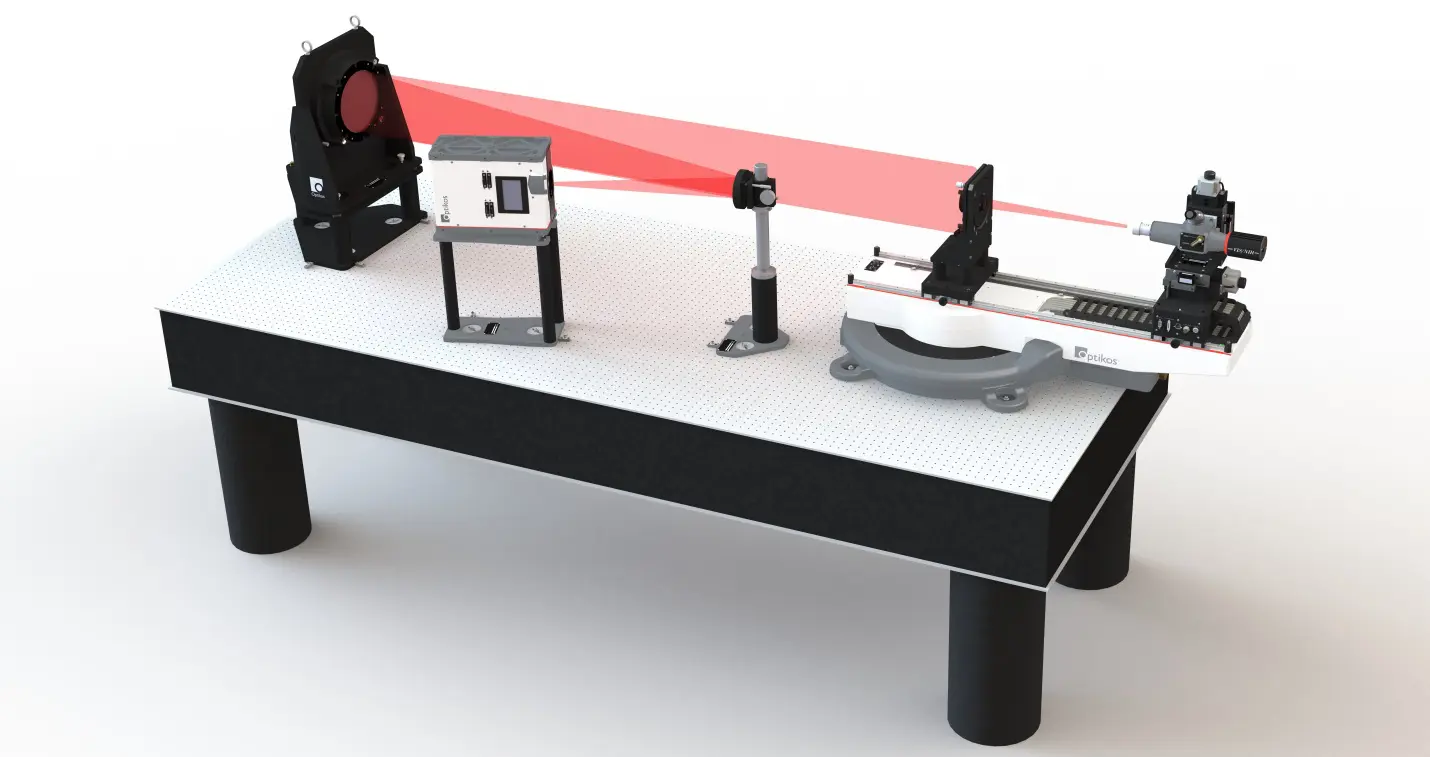
As for illustrating or photographing this effect, it would be difficult to do directly. Instead, we can measure the transmitted wavefront error of the eye using a “double pass” method, often employing a Shack-Hartmann wavefront sensor. This wavefront data can then be used to calculate the eye’s PSF.
Answered by: Ben Masella, Principal Optical Engineer at Optikos
Question:
Aerial imaging systems are usually limited less by optics design and more by how performance is communicated across vibration, motion, and thermal drift conditions.
How do you typically make those system-level behaviors visible during early-stage customer evaluation?
Aerial imaging systems are usually limited less by optics design and more by how performance is communicated across vibration, motion, and thermal drift conditions.
How do you typically make those system-level behaviors visible during early-stage customer evaluation?
Answer:
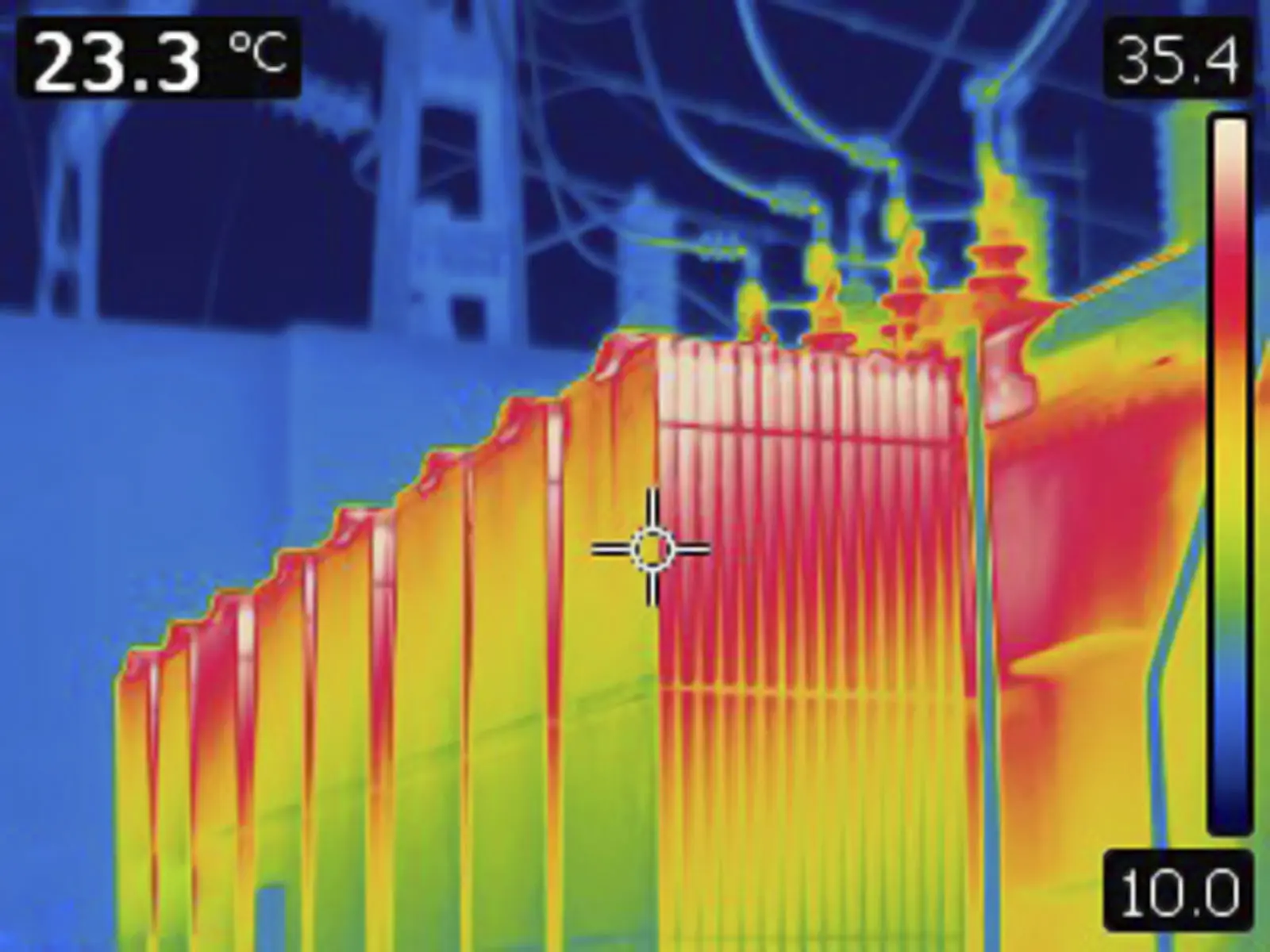
This is an excellent question. Aerial imaging systems typically experience some unpleasant environmental factors such as shock, vibrations, thermal excursions, and even pressure changes. Maintaining performance over these conditions requires careful consideration early in a development process.
At Optikos, we start with the specifications and requirements and see how that fits within our heritage designs, then choose an optical or opto‑mechanical architecture that is best suited for the requirements and application. Once the architecture is defined, we evaluate the design using STOP analysis to generate a predictive model of system‑level performance against environmental stressors.
Finally, we validate that model by subjecting our prototype builds to full environmental testing and comparing lens performance against our predictions. We find that this process takes a lot of the uncertainty out of a design effort and maximizes the real‑world performance for our customers.
Answered by: Nathan Wallace, Director of Engineering at Optikos
Question:
Does a workforce question count? There are so many STEM related questions that can be pondered, but what about the graduating student choosing a career pathway, or person looking to upskill their career? What skills or training do you look for when hiring in the field of optics? Are there growth opportunities in optics?
Does a workforce question count? There are so many STEM related questions that can be pondered, but what about the graduating student choosing a career pathway, or person looking to upskill their career? What skills or training do you look for when hiring in the field of optics? Are there growth opportunities in optics?
Answer:
The optics industry is experiencing significant growth potential at the moment fueled by advancements in AR/VR technologies, autonomous vehicles, medical devices, semiconductor fabrication, and defense systems. To your question about where you should start, here is what I recommend:
Start with what you’re passionate about
Optics and STEM are vast fields. So, begin diving into aspects that truly mean something to you. This may include lens design, fiber optics, laser systems, or metrology. Since optics requires lifelong learning because there are always new applications and theories coming up, having a deep passion for what you’re doing will help you overcome challenges. Which in this field, are inevitable.
Foundational skills trump software skills
When hiring for optics positions, we usually look at the foundational skills of the person. That is because those skills are highly transferrable in between new software systems and projects. Ray tracing software such as Zemax, Code V and FRED and tolerancing software like Code V and ASAP may come and go. But the underlying principles are the ones that stay. So, you should work on understanding geometric and physical optics and mathematical principles like calculus and differential equations.
Focus on core competencies
As an optical designer, for example, you’d need to master a few key areas like raytracing, tolerancing, metrology, and mechanical integration environments. The ability to understand the limits of each process and how they interlink is as important as understanding how to utilize them.
Each of these paths presents different opportunities, particularly as different fields begin to converge (optics + AI, optics + quantum computing, etc.).
Finally, having a growth mindset
Never stop learning because the sector never stops growing. Read books, sign up to relevant newsletters, follow certain engineers or institutions on LinkedIn, participate in webinars. Your educational options are endless nowadays. So, stay sharp.
With that, I wish you and everyone looking to have their breakthrough in optics good luck on your path! The world needs great optical engineers.
Answered by: Lars Sandström, Director Business Strategy at Optikos