Share this Post
The Customer
In this case study the client was developing and commercializing proprietary DNA/RNA detection technology. Their goal was to improve patient outcomes, combat antibiotic resistance, and promote antimicrobial stewardship in various ambulatory settings including hospital outpatient and emergency departments and long-term care facilities.
The Problem
The client had developed a “proof of concept” breadboard using off-the-shelf components and a mobile phone, but lacked the optical engineering or manufacturing capabilities to bring together an Alpha prototype. They approached Optikos to create a more robust design that could serve as both a development platform and a demonstrator system for fundraising efforts, all within a tight timeline.
How Optikos Solved the Problem
Optikos relied on its well-proven, gated product development process for medical devices, along with a dedicated team of full-time engineers (FTEs), to deliver units for de-risking and further product development. Completing a project of this magnitude within a limited time frame required a robust, multidisciplinary internal team and strategic partners. A wide range of technical functions and skill sets were essential for the project’s on-time completion, including project management, optical engineering, electronic and electrical engineering, mechanics and optomechanics, and industrial design.
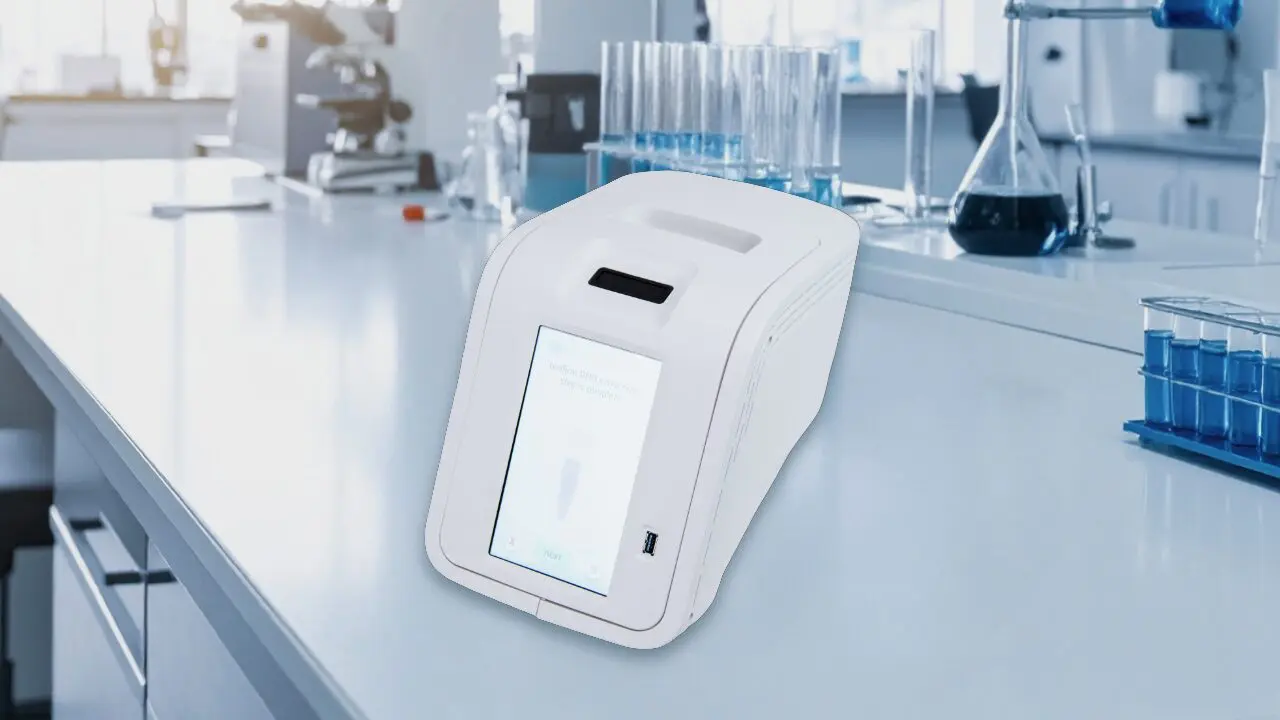
Within the established five-month timeline, Optikos delivered 15 fully functional, highly reliable, long-lasting demonstrators, progressing from a clean-sheet design to an operational proof of concept. The development process adhered to ISO 13485 standards, and the devices continue to function years later, remaining in regular use for ongoing R&D.
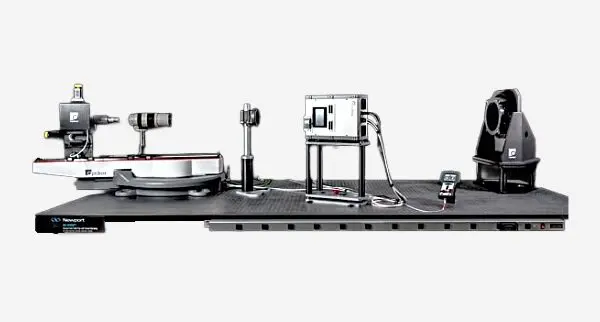
Optikos managed all aspects of product design, while outsourcing the industrial design to a strategic partner. The instrument development was complex and involved several components, including thermal controllers, a sample loading mechanism, LED-based fluorophore excitation, imaging optics and camera, a motion controller, illumination control, and custom control software with a graphical user interface (GUI).
Conclusion
This case study demonstrates Optikos’ ability to support optical, illumination, opto-mechanical design, project management, and rapid prototyping of multiple prototypes that can be rapidly transitioned to manufacturing. Optikos’ ability to design, build, and test all types of optical systems–paired with a robust supply chain with some of the best suppliers in the industry–provided the client with exceptional hardware that met the specific needs and quality demanded by the client’s specifications.
Whether a client needs an off-the-shelf two-channel fluorescence detection system with a wide range of excitation and emission bands for early de-risking in a rapid turnaround, feasibility for a qPCR product, or ground-up development with the ability to transition its organization to volume manufacturing, Optikos will ensure success.