As The Optical Engineering Experts™, our team is recognized for leadership in optical design, engineering, metrology, and manufacturing. This collection of technical papers showcases our contributions to the optical engineering community and reflects our commitment to advancing the field of optics.
DfX in Action: Modular Strategies for Assembling, Servicing, and Optimizing Complex Optical Systems
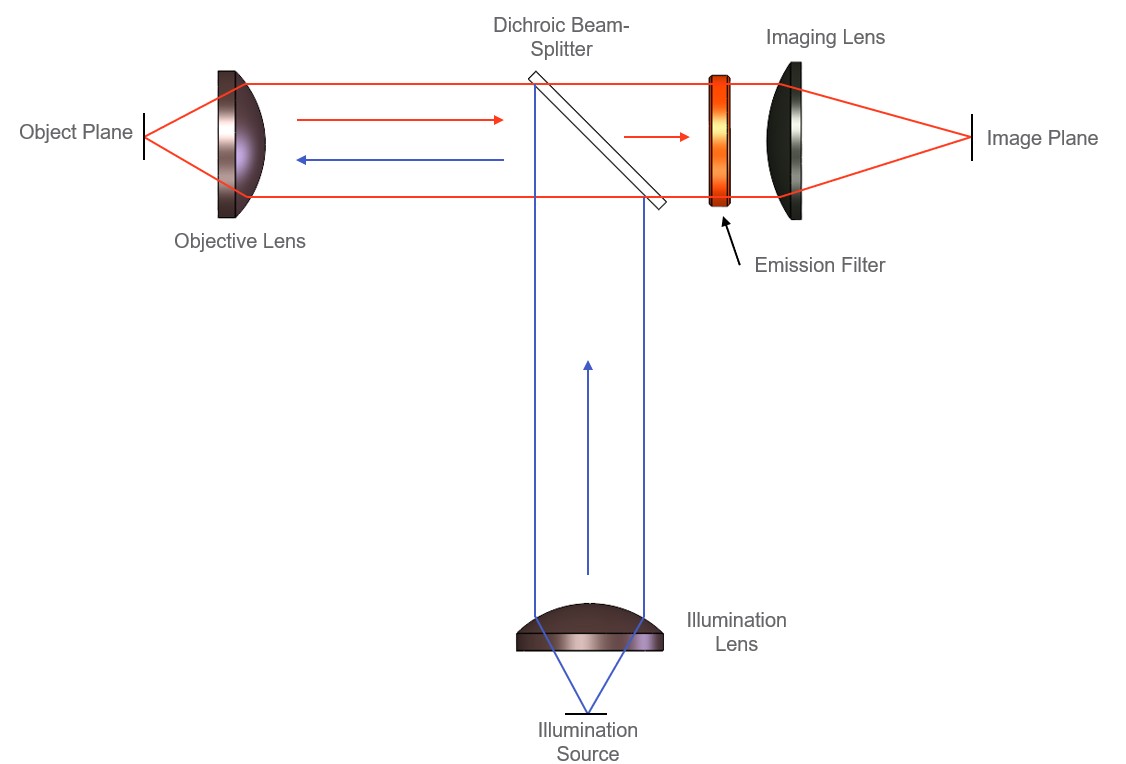
Written by Nathan Wallace ABSTRACT Design for Excellence (DFX) is a strategic approach that guides key decisions throughout the design process of complex optical systems. The “X” can represent various processes within manufacturing, assembly, cost, or performance. Explore how modular design techniques support assembly, serviceability, and system performance, offering real-world insights into practical implementation, design trade-offs, and system optimization. Applying DFX principles and modular techniques early in development can streamline processes, reduce costs, and elevate overall product quality. [1] High-level optical architecture of a fluorescence imaging system. Excitation light (illumination source) is directed towards the dichroic beam-splitter, where it is delivered to the object plane through the objective lens. Emission light is collected by the objective lens, passes through the...
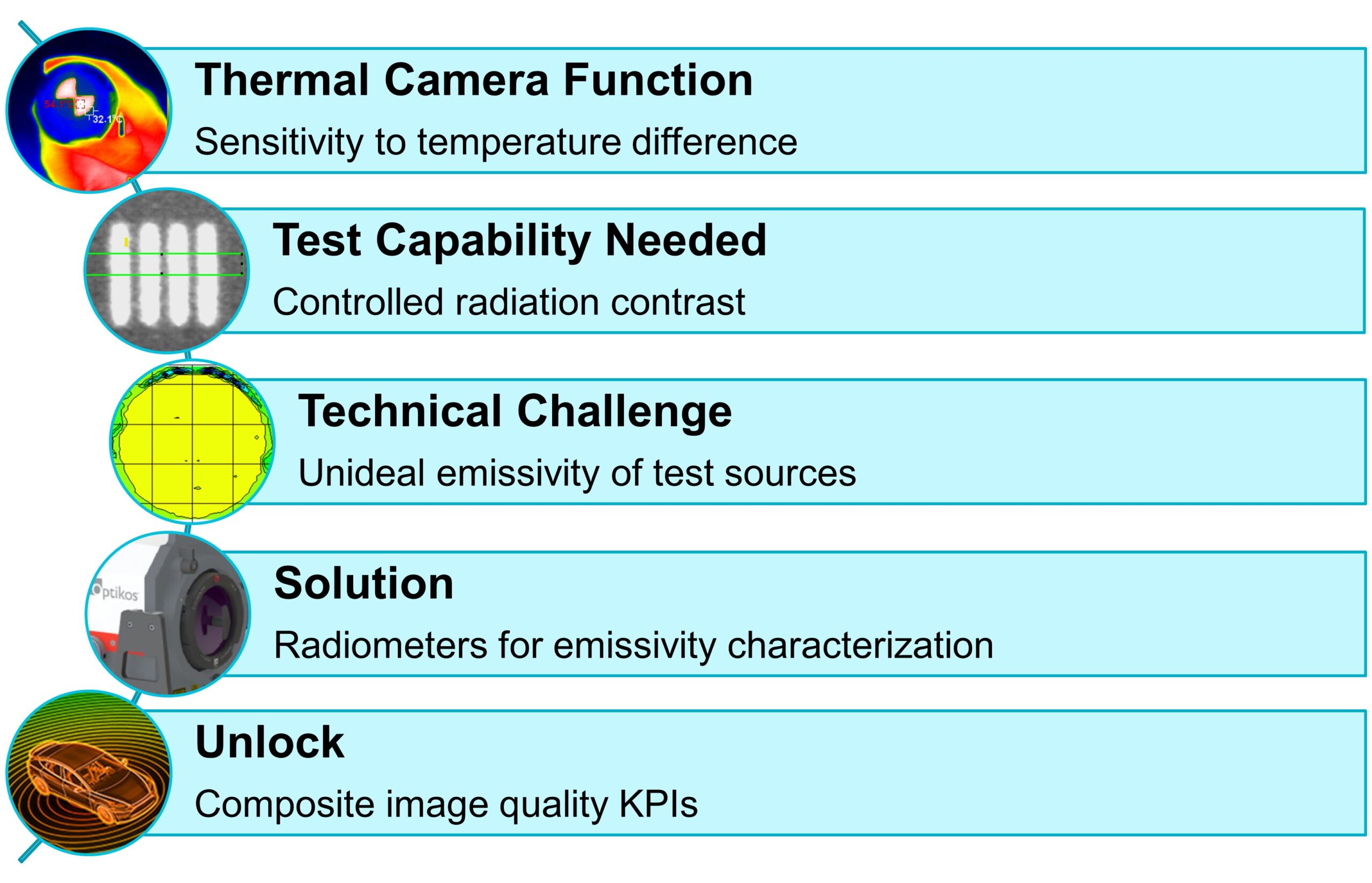
Why Ignoring Emissivity in Thermal Camera Testing Should Not be a Grey Area
Written by Kevin Sweeney, Principal Optical Systems Engineer, Optikos Corporation ABSTRACT Thermal imaging, once limited to the defense sector, is increasingly being adopted in the automotive industry, bringing challenges in scaling production and ensuring accurate performance testing. Critical to this is precise characterization using standardized metrics like Minimum Detectable Temperature Difference (MDTD) and Minimum Resolvable Temperature Difference (MRTD), which are complicated by factors like target emissivity and optical attenuation. Infrared radiometers help relate physical temperature to radiometric output but are complex, especially in the longwave infrared (LWIR) range due to self-emission and calibration sensitivity to ambient conditions. As automotive demand grows, miniaturized and well-calibrated radiometers are essential to ensure test accuracy and production efficiency. This presentation explores the design and...
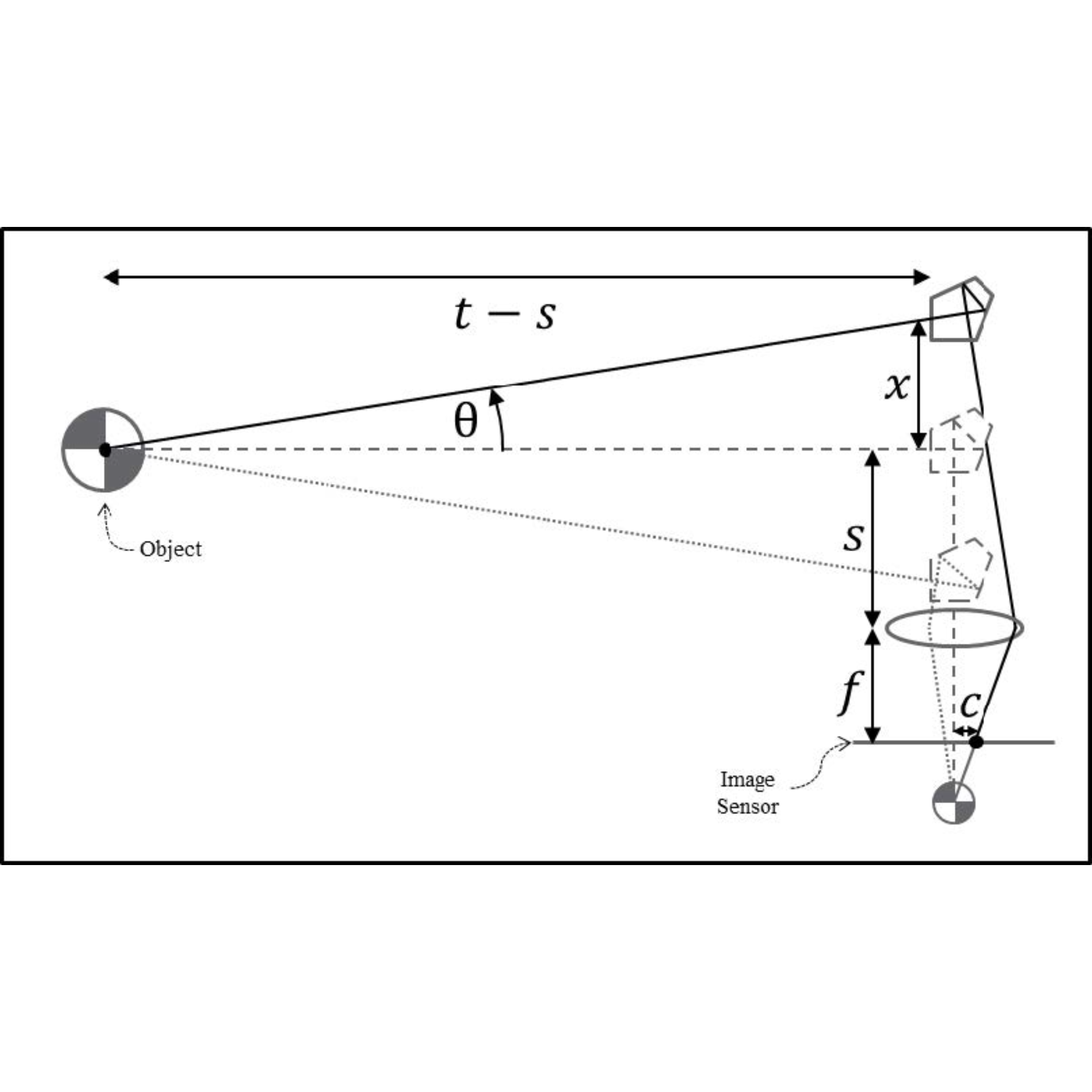
The Measurement of Object Distance for Projected Virtual Objects using a Scanning Pentaprism and Digital Alignment Telescope
Written By Kevin Sweeney, David A. Imrie ABSTRACT A standard method for assessing collimation involves sampling a series of sub-apertures across the collimating optic an evaluating the local wavefront slope at each position. In practice, this is done by employing a sliding pentaprism to scan the smaller pupil of an alignment telescope across the collimator pupil. Variation in angle of incidence, recorded as image translation in the telescope, indicates collimation error. We have increased the utility of this technique by automating the scanning motion, image collection, and tracking of the observed centroid at a sub-pixel level. Automating the measurement process ensures accurate and repeatable results by eliminating reliance on operator judgments of image quality and reticle positions. Furthermore, automation advances...
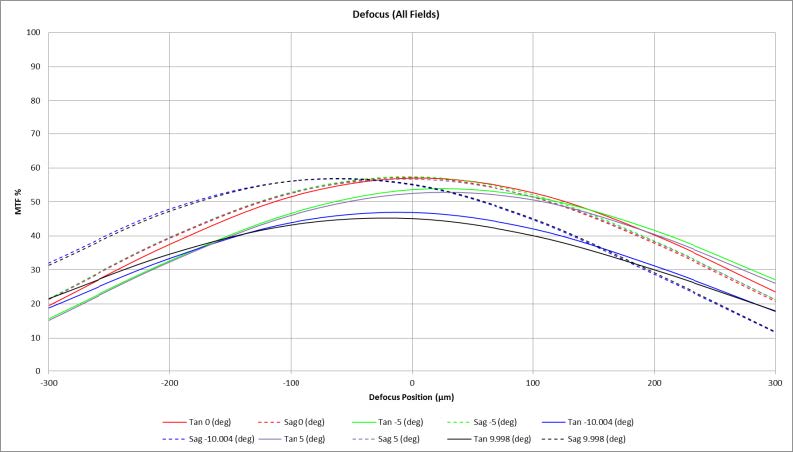
Innovative Test Method for Validating Image Quality Performance of Automotive Lenses Over Operating Temperature Range
Written by Hillary M. Balonek, Optikos Corporation ABSTRACT The use of electronic imaging systems in the automotive industry has increased dramatically as a result of the wide spread implementation of optical-based safety systems and driver assistance features in new vehicles. The challenging environmental requirements for automotive cameras have given rise to the need for image quality testing of these cameras over a wide range of operating temperatures. Functional and survivability testing of camera assemblies is relatively straightforward and may be carried out in conventional environmental chambers, but assessing the imaging performance of the lens over temperature is critical in evaluating whether hardware performance meets design intent and presents a much more challenging metrology problem. The lens must be contained within...