Mentoring the Next Generation of Optics Disruptors with Lars Sandström
Date
April 2, 2026
Author
Daniela Dandes
Time
6 min
Share this Post
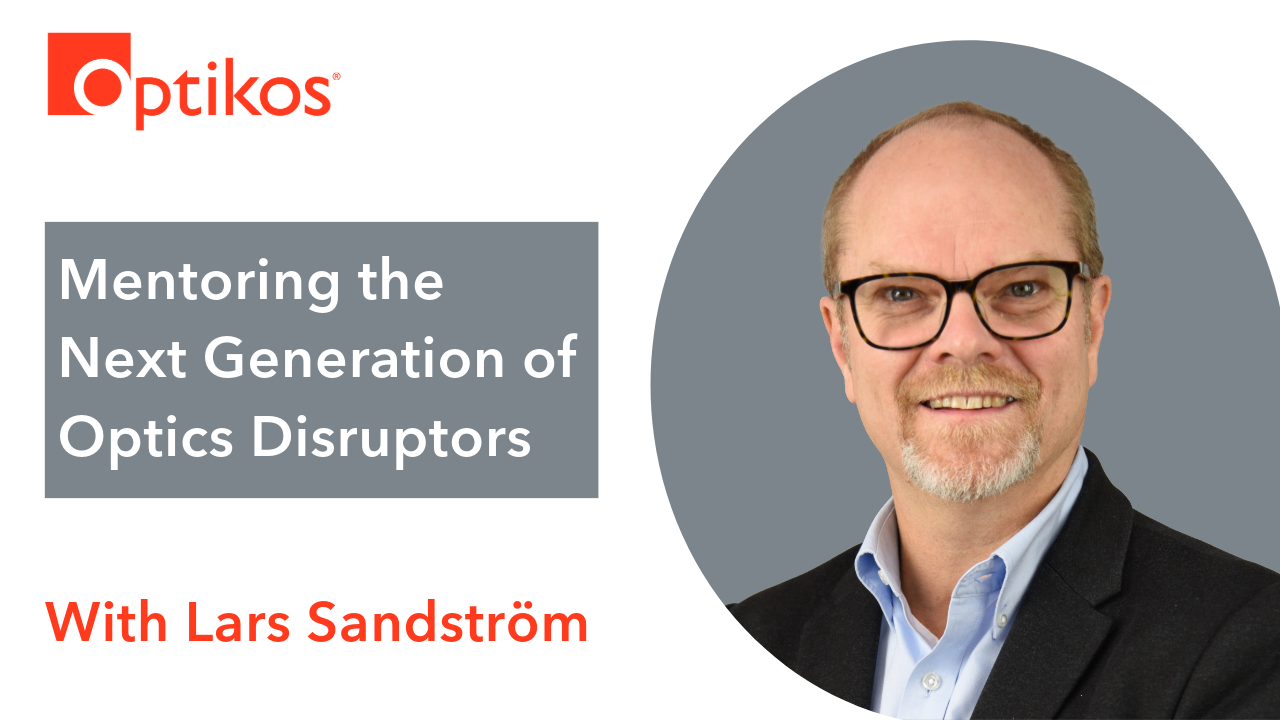
An idea can be brilliant, and it can still fail to find traction. This is one of the hardest lessons the startup ecosystem has taught us over time. And this is the reality executives like Lars Sandström are preparing the next generation of optical innovators for by mentoring them to build stronger, more viable enterprises.
As Director of Business Strategy at Optikos, Lars operates at the intersection where technical innovation meets market reality. With more than 30 years of photonics industry experience, he has witnessed firsthand how brilliant technologies can falter without proper commercial guidance. Beyond his corporate achievements, Lars holds five US patents with several more pending, an accolade that backs his active role in steering the optics industry forward.
We sat down with Lars to reflect on one of the most rewarding experiences of his year (so far): guiding a mentee startup to victory at the 2026 SPIE Startup Challenge. While the award celebrates technical brilliance, the true triumph lies in the journey of transforming a promising prototype into a resilient business capable of thriving despite volatile market realities. Read about the insights, challenges, and hard-won wisdom that shaped this journey in the interview below:
Q: Lars, you’ve taken on a unique role of mentoring startups, especially those that work on optical innovations. How did you get involved in such a venture?
Lars Sandström (LS): It all started when SPIE approached me. They were looking for optical experts who can share from their experience on what it takes to be technically and commercially successful. My interest in joining the mentorship program, aside from working with interesting people, is in seeing where things are going. This is stuff you’ll never see anywhere else. Even if a startup is not successful, you still have access to the information of what they were building and why the idea didn’t work. There is a lot to learn from such a 360-degree view.
Q: What kind of guidance do you provide for these startups?
LS: Talking about tech innovation is easy nowadays. What is hard is understanding the market ecosystem and how to get your product to sell in the most efficient way possible. That’s where I step in.
Most of these entrepreneurs are extremely talented engineers. But they don’t see beyond the widget. They develop a medical device prototype in their lab with their own money, raise $100,000, and think they can go to market. But that $100,000 needs to set up a qualified production line, get through FDA approvals, do a market launch, and start selling to get more funding. So, that initial plan ends up not working. That’s where people like me can be useful. I guide the teams to look at what’s realistic: how to present their pitch to investors, what costs to expect, and how to conserve money by doing things sequentially rather than in parallel.
Q: Can you share an example of a startup you’ve mentored that succeeded?
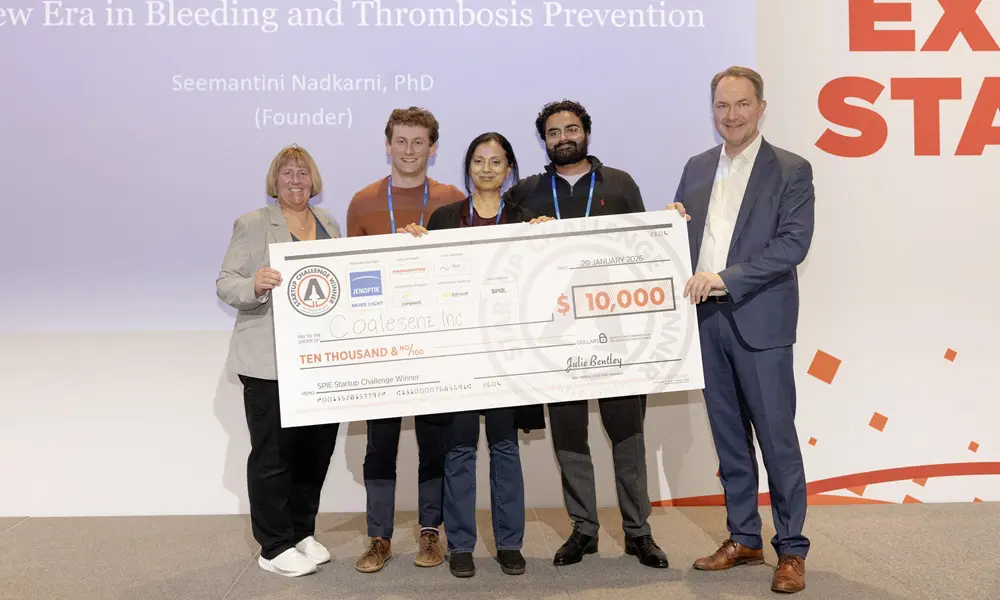
LS: Yes, in fact, Coalesenz Inc. won the SPIE Startup Challenge this year. Their biggest advantage is that they’re solving a real-world problem that affects millions of people on a daily basis. They’ve developed an optical blood coagulation monitoring device that can determine whether a patient’s blood is clotting too quickly or too slowly in critical situations. When someone has an injury, is waiting for surgery, or is in the emergency room, blood flows. If it coagulates too quickly, you risk a fatal blood clot. Too slowly, and you bleed out. Their technology manages to inform hospital personnel about their patients’ blood status quo in seconds rather than hours. This, in turn, enables fast bedside decision-making that will save countless lives. That’s the kind of innovation that wins awards and I am very proud to have supported them with the pitch to the judges.
Q: What makes their technology innovative from an optical perspective?
LS: They use a speckle technique to analyze blood samples optically, which fundamentally changes the testing timeline. Traditional chemical tests require hours to produce results, but their method delivers answers in seconds. This speed difference is critical because it enables bedside testing. That means that doctors can now make immediate decisions without sending samples to a lab or relying on other time-consuming ways to receive the same results. The device works with a small blood sample, making it practical for emergency situations.
From an investment perspective, their solution translates to clear, actionable data. Investors typically have 5–10 minutes to evaluate a technology’s viability, and optical approach of the Coalesenz team to fix a big problem won people over. The scattering patterns they analyze show blood clot stiffness over time, providing measurable outcomes that demonstrate both the technology’s precision and its clinical relevance. This combination of speed, simplicity, and verifiable results is what makes the technology compelling and relevant to have around.
Q: What was the most challenging aspect of working with the team?
LS: Storytelling. They have so much information they want to tell the world. The challenge is down-selecting what’s important and what isn’t. Everything is part of a story, but you need to reduce the information so the audience reaches the right conclusion at the right time, which is: “I want to give money and attention to this project.” And that happens preferably in the present. I think that we managed to do just that considering the SPIE Startup Challenge result.
Q: How did you feel when they won?
LS: They jumped up and down and came straight to our booth at Photonics West 2026 to tell me all about it. I was and still am very happy because it is a product with high potential. I know that for a fact because my wife was a dialysis nurse until she retired. So, having what Coalesenz are making today back when she was working would have been a gamechanger for her and others. It’s truly a life-saving innovation.
Q: What’s next for you and Coalesenz?
LS: I’m actually visiting them shortly. So, I’ll be looking forward to hearing from and advising them on their next commercial steps. Because now that they have got the technical validation for their product, we should focus on storytelling again. Meaning that we should see how to go about the platform offered by this important award from SPIE to reach the next evolution stage for the startup.
Q: Has this experience influenced your work as Director of Business Strategy at Optikos?
LS: It has reshaped how I approach strategy, though not in the way you might expect. I’ll be honest: I’ve become more cynical on the one hand. And I think that’s inevitable when you’re watching countless brilliant ideas fizzle out with only a few making it. This tough experience teaches you to temper optimism with realism. Yet, there’s a flip side. You also see what’s genuinely possible. So, when added up, the wealth of experience helps in foresight and better decision-making.
For example, when a team declares a technical hurdle impossible, I know differently because of something I’ve seen from these startups. Since most projects are confidential, I can’t outright say how I know that. So, when I push back against a “no,” I just have to stand firm. To my colleagues, this might read as stubbornness. But it’s not. It’s experience. So, even when my colleagues don’t like it, they have to accept my “trust me, I know” line from time to time. And their patience pays off.
Q: Any words of wisdom for aspiring optical innovators?
LS: People are afraid of talking. They’re afraid that others will run off with their idea. Or they think they are more brilliant than others, so they keep quiet instead of asking for honest feedback. If you don’t talk to people, you think you’re the only one who knows the solution. Then, you bring it to market, and nobody buys it. So why go through that experience in the first place when you can be better through feedback? Talk to the people you trust. Talk to people in general terms to solicit feedback if you’re afraid of your idea being stolen. Like, obviously don’t discuss things with your competition, but you do need input from someone else, otherwise you won’t get to your goals fast enough. And time to market is everything.
Catch Lars Sandström at his next event, which is the SPIE Defense + Security on April 29th, 2026. He will be hosting a presentation: “Automated production flow of lens assemblies enables scalable, low-cost production of high precision lens assemblies”. Register today at https://spie.org/registration/online/DS26
Coalesenz Inc. is based in Boston and specializes in optical blood coagulation monitoring technology. For more information about the SPIE Startup Challenge winners, visit spie.org.
Learn how our optical engineering expertise accelerates breakthroughs in life sciences and diagnostics.
Share this Post
See More Posts
Blog
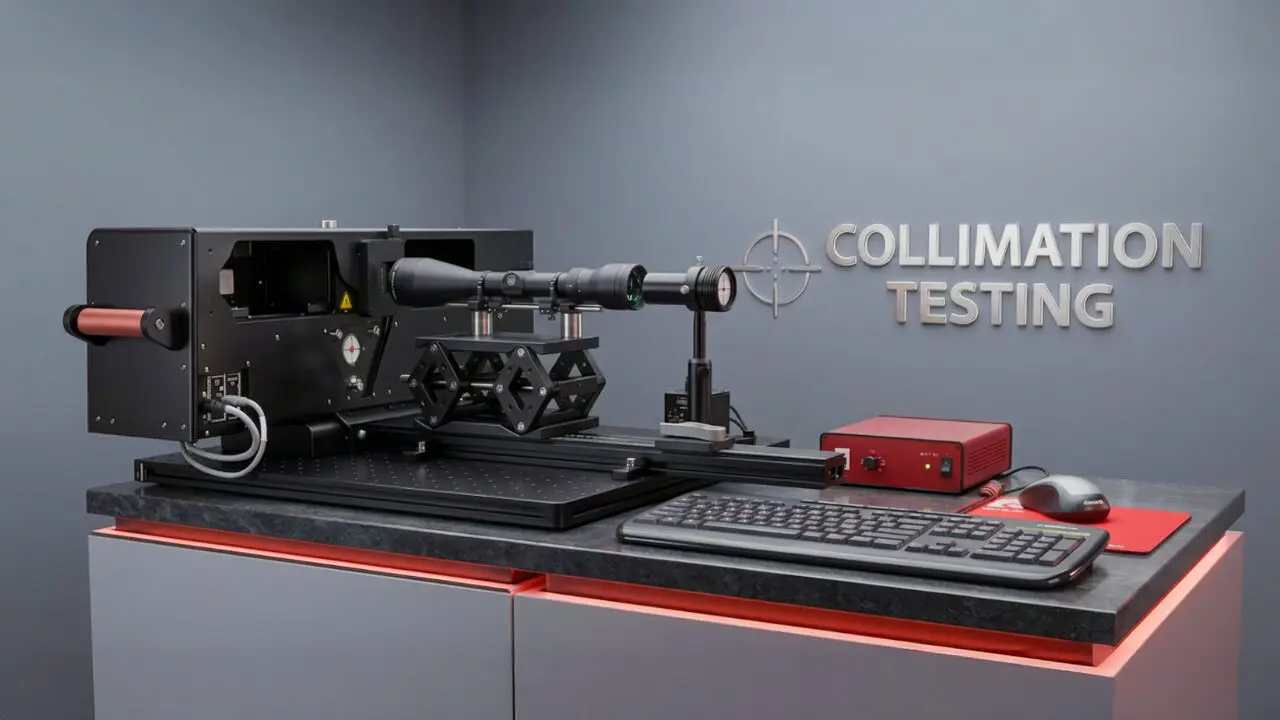
Heuristics Are Making Way for Hard Data in the Nightforce Optics and Optikos Partnership
09/25/2026
•
6 min
Blog
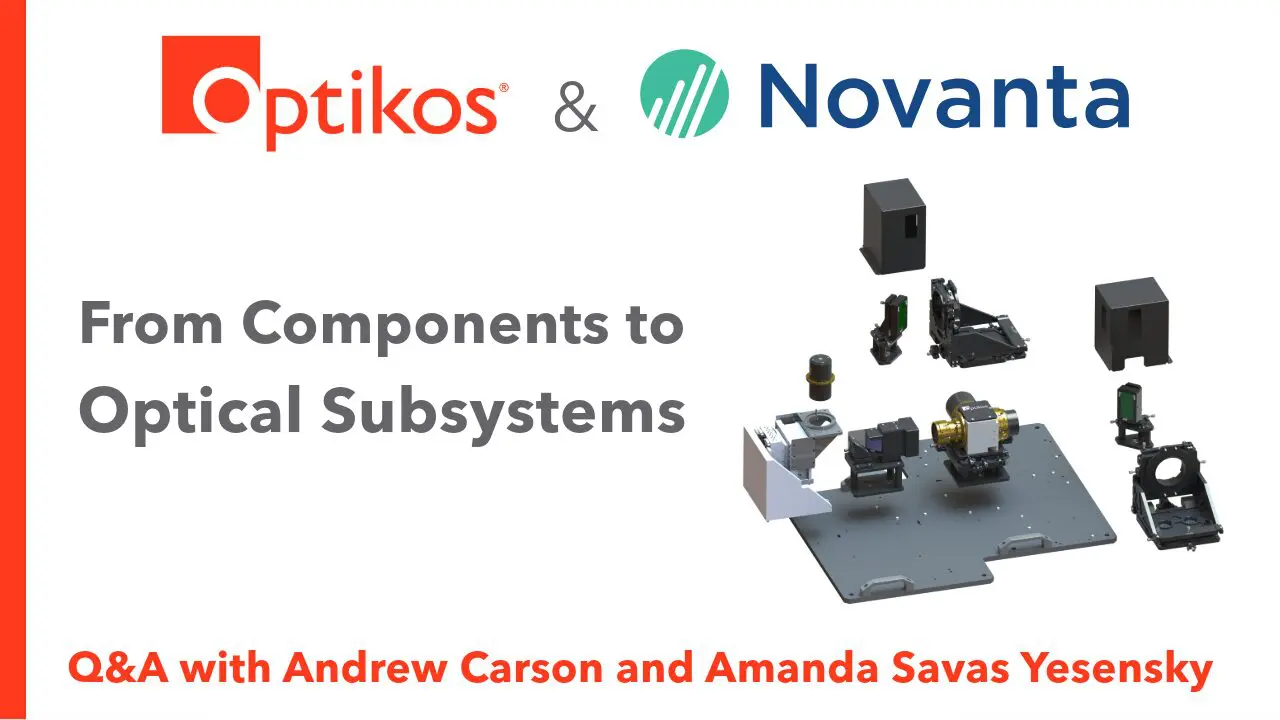
Q&A: From Components to Complete Optical Subsystems: The Novanta and Optikos Collaboration
07/22/2026
•
7 min
Blog
Optikos Achieves Zero-Finding
ISO 13485 Recertification: A Conversation with Nick Mastrocola, Quality Manager at Optikos
07/13/2026
•
6 min